History of the Selmerhof
Farm & Alpine huts
On the sunny slope of Innervillgraten, at 1650 meters above sea level, stands our apartment house with agriculture and beekeeping, and a breathtaking view of the Villgraten mountain scenery.
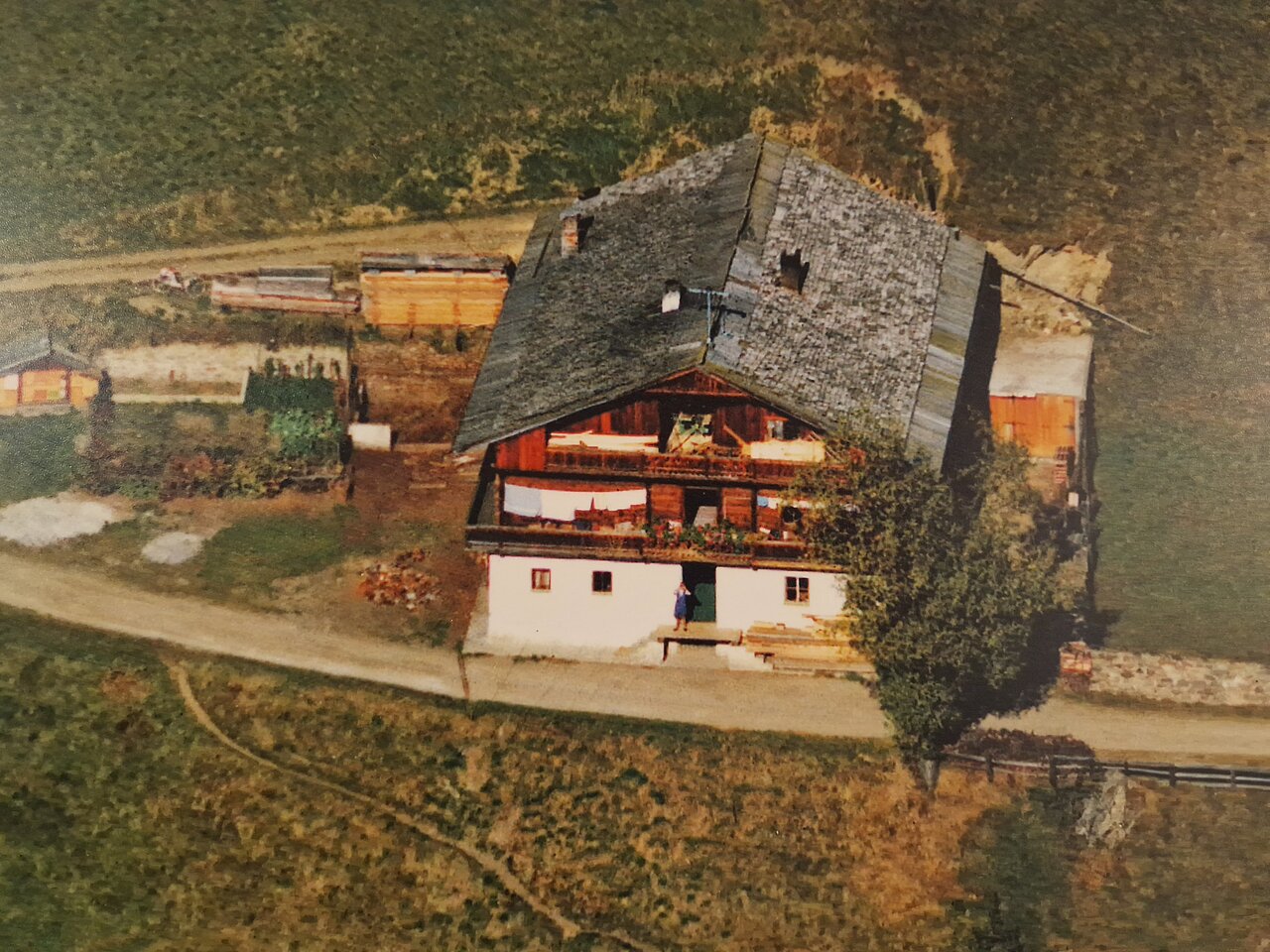
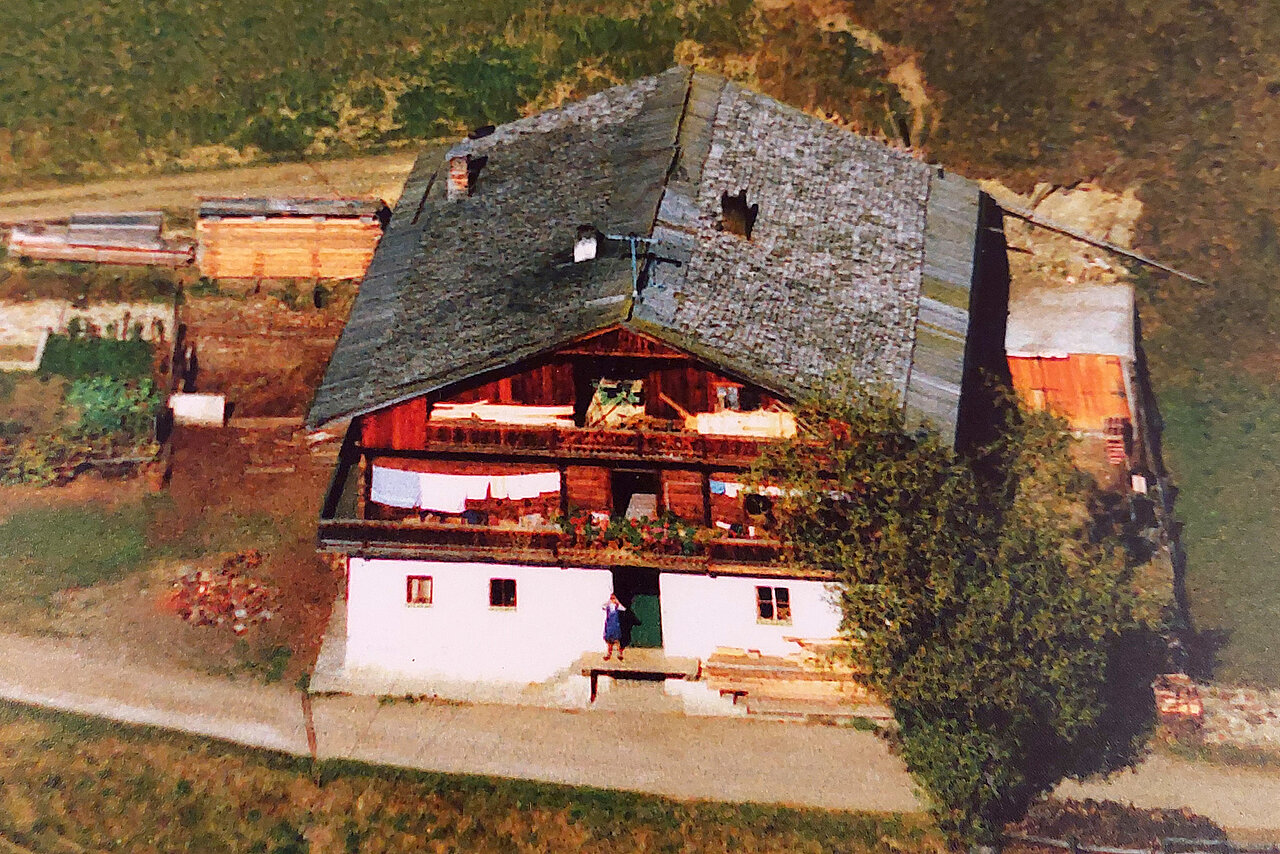
According to tradition, the former Selmerhof farm burned down in 1912. Our ancestors then rebuilt the farm with great effort.
During the hard war years (WW1 and WW2), the focus was solely on the survival of the farming family and the domestic animals.
Until 1970, the whole family and all the animals spent the summer months on the mountain pastures mowing hay for the winter. On the farm, the reasonably accessible areas were used to grow grain, potatoes, all kinds of vegetables and linen seed for making clothes.
When mechanization slowly came to the valley and the standard of living improved, the alpine huts stood empty because the farmers worked the alpine meadows from home with tractors and cars.
Then came the idea that these huts could be rented out to the "summer visitors", as they were called at the time.
This was accepted and the owner earned a little extra money, so the alpine huts have been preserved to this day.
Our farm from 1912
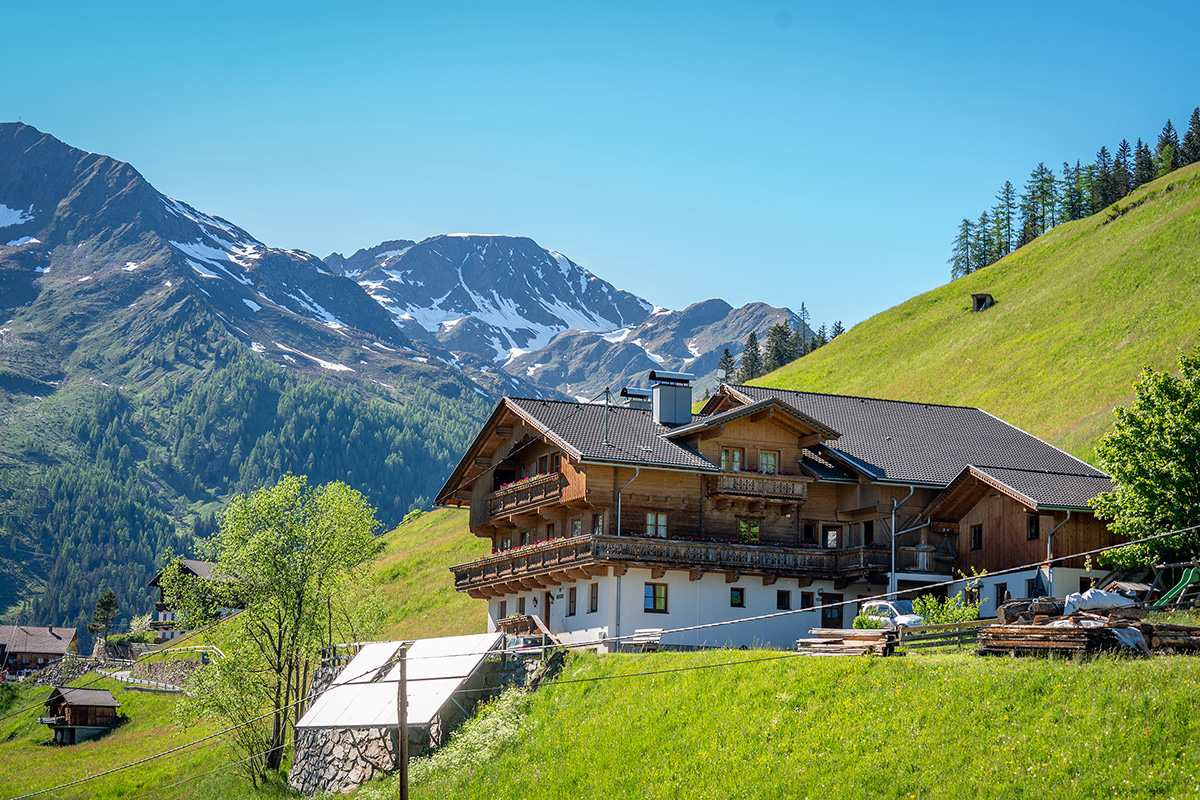
Apartment house and surroundings
Farmhouses and Alpine huts
Relaxing vacation on the farm
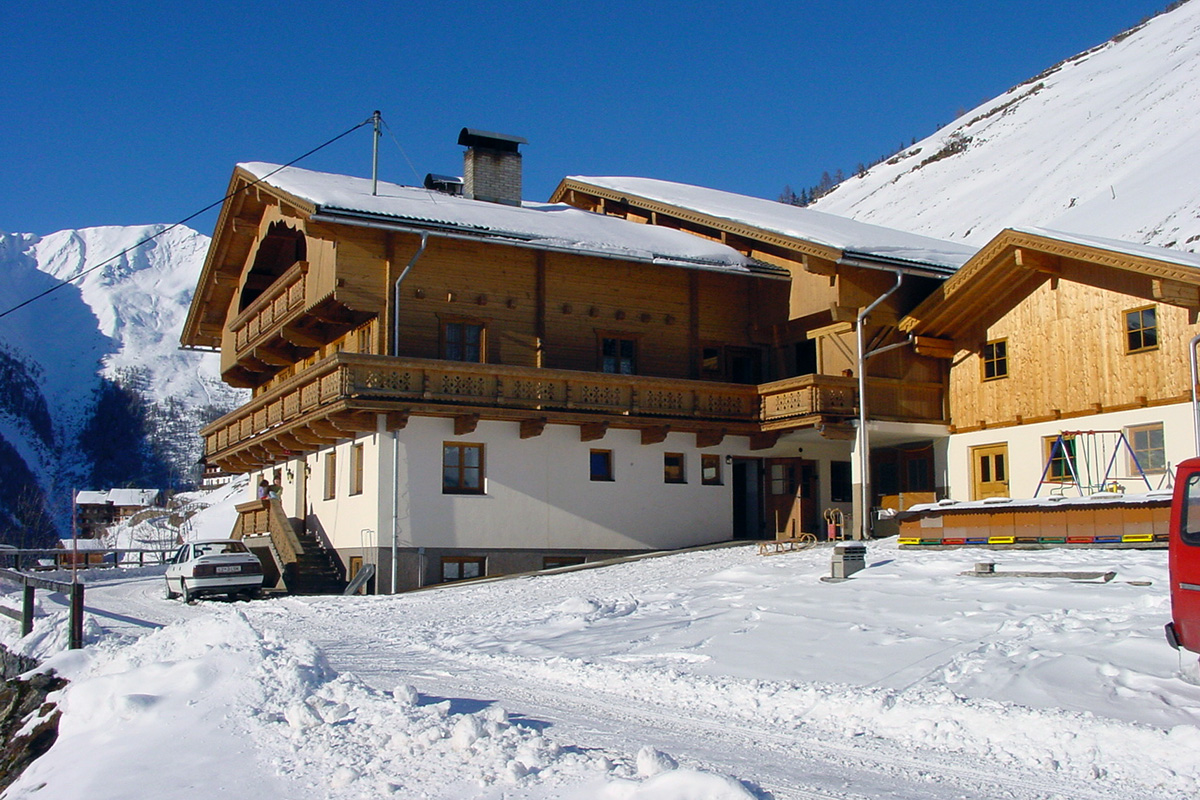
Our small, idyllic farm at 1,648 meters above sea level. Here, tractors and modern equipment stay in the garage—a lot of manual labor is part of our daily routine. The total area of our farm is 18 hectares, of which 5 hectares are mountain meadows that are no longer mowed and 9.20 hectares are forest, partly protective forest with low growth. The farm's home area of 3.90 hectares and the alpine meadow of 2.10 hectares are mowed twice. Approximately 70 grass silage bales are produced, and the rest is processed into hay. There is a lot of work to do in the summer. In addition to renting out rooms and beekeeping, we collect sufficient feed supplies for our 5 to 6 cows and calves. Every hay harvest is an unforgettable family experience for us! Our guests can also help with the haymaking and enjoy the scent of fresh hay.
The existing farmhouse was rebuilt in 1988. Until 2003, only one vacation apartment for four people was rented out to guests. Following the renovation and extension in 2003, five vacation apartments are now available to guests.
Gutwenger alpine hut on the Unterstalleralm
In 1984, after the hay barn burned down, we built an alpine hut with a stable, hay storage, and two living units on our meadow at the Unterstalleralm.
At first, one apartment was for our private use during the summer months, and the other was rented out to guests. Now, the entire hut is rented out to guests.
Selmer Alpine Hut on the Oberstalleralm
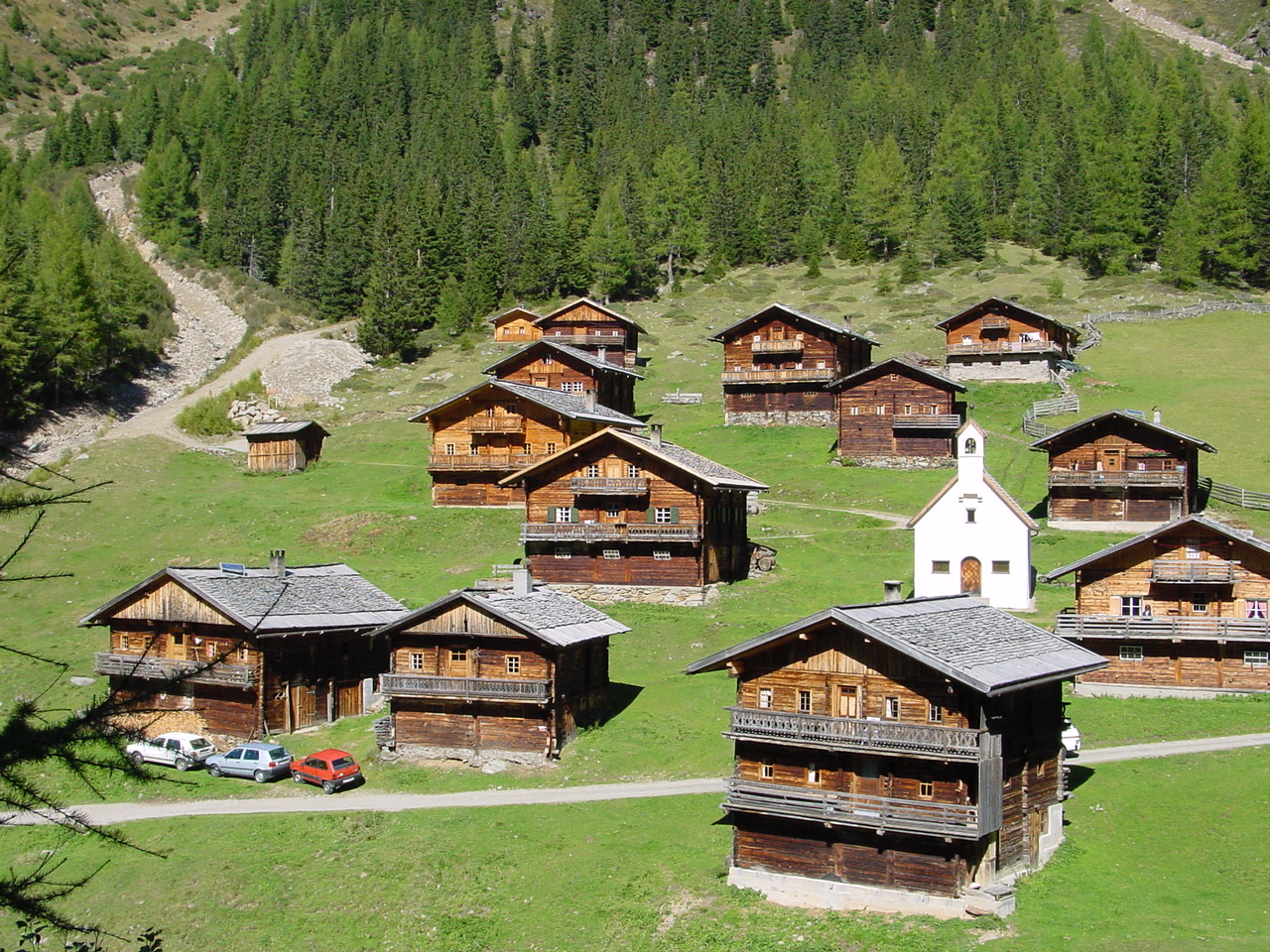
The Selmerhütte was built in 1857 and used for cattle grazing during the summer months until 1971. At that time, the alpine pastures were a summer residence for farmers. To obtain hay for the winter, all the alpine meadows were mowed, and the walk from the alpine huts was much shorter than from home.
From the 1970s onwards, with increasing motorization, the alpine huts stood empty. With the growing interest of the few “summer visitors” at that time in spending their vacations in a remote alpine hut, the farmers began to consider generating a small additional income.
Since then, most of the alpine huts in Innervillgraten have been rented out to romantic vacationers during the summer months.
History of the Villgraten Valley
Landscape culture in wood and greenery
Landscape culture in wood and greenery The settlement of Villgraten began in 1140. At first, only livestock farming was practiced, but soon agriculture was also introduced in order to provide the community with its own grain.
The first farm is mentioned in documents in 1243. In 1267, a pastor is mentioned in Innervillgraten for the first time. Around 1300, about a third of the farms must have already existed, and by the end of the Middle Ages, all 120 original farms in the Villgraten Valley had been established, some of which had already been divided. In the early modern period, the division of farms continued at an increased pace in order to increase the number of agricultural businesses. The beautiful alpine villages of Oberstaller, Kamelisen, and Alfen with their impressive buildings, known as “Kasern und Kammern” (barracks and chambers), are a characteristic feature of Innervillgraten. The crops harvested by hand on the steep slopes were rather modest. But the people of the valley were naturally forced to be modest. The hamlet of Kalkstein with the pilgrimage church “Maria Schnee” also belongs to the municipality of Innervillgraten.
Translated with DeepL.com (free version)